


Ever wonder how a camping generator can make your outdoor adventures so much easier?
Imagine pitching your tent under a starry sky while your phone, lights, and other gadgets keep humming along without a hitch.
It might sound like a dream, but a good generator really delivers. Think about its quiet performance that won’t disturb the peaceful night, its lightweight design making it easy to move around, and the steady power that keeps everything running smoothly.
This little powerhouse is a smart pick for anyone who loves nature but still wants to enjoy modern comforts. Next time you plan a camping trip, consider how reliable power could truly change your getaway.
Key Features of an Ideal Camping Generator
When you’re choosing a camping generator, it’s all about finding the right mix of power, light weight, and quiet operation. Imagine having a compact power system that reliably lights up your campsite while working as quietly as a gentle conversation at around 60 decibels from 23 feet away. This means you can charge your phone or laptop without bothering your neighbors. Inverter generators, which use smart technology to keep the power steady, are a favorite on off‐grid trips because they handle even sensitive devices with care.
Another key factor is how long the generator can run under different loads. Some models, like those offering 4,500 W max and 3,700 W rated power, can last about 8.1 hours, while others with 5,500 W max and 4,000 W rated power push to around 8.6 hours. And when it comes to weight, there’s a range from as light as 47 lbs to as heavy as 131 lbs. This allows you to pick a generator that’s perfectly tuned to your needs, whether you’re after a nimble, portable unit or a sturdier option that still packs a punch.
Here are the seven essential features that define a reliable camping generator:
- Inverter technology
- Low noise operation
- Long runtime
- Adequate wattage capacity
- Manageable weight
- Fuel efficiency
- Safety certifications
When these features work together, you get a reliable power companion that runs your essential gadgets and small appliances all while staying quiet and safe. This careful blend of smart design and practical performance makes sure your generator is always ready for your next outdoor adventure.
Comparing Fuel Options for Camping Generators

Choosing the right fuel can really change your camping experience. It affects how long your generator will run, the noise level, your fuel bills, and just how easy it is to use overall. Every fuel has its own ups and downs, so it’s important to pick one that fits your camping style.
| Fuel Type | Runtime | Pros | Cons |
|---|---|---|---|
| Gasoline | 8.1–8.6 hours at half load | Strong power and longer runtimes | Costs more and can be noisier |
| Propane | Just a bit shorter than gasoline | Clean burning with lower emissions | Needs careful on-site storage |
| Solar | Variable; best for overnight setups | Runs silently and uses renewable energy | Weather-dependent and has a higher startup cost |
| Battery | Varies with capacity and usage | No noise and zero fuel costs while running | May give less power and needs recharging |
If you're a tent camper who loves a quiet, low-impact power source, you might lean toward solar or battery options. But for RV users needing steady, powerful energy for appliances, gasoline or a dual-fuel setup could be the way to go.
Reducing Noise Levels of Camping Generators
At many campgrounds, you'll find generators that hum along at around 60 decibels or less when measured from 23 feet away. That’s about as loud as a casual conversation, making these generators a perfect fit for spots with sound limits. Some quieter campsites go for even softer settings, between 48 and 55 decibels, keeping the natural calm intact, especially in the early morning or late evening when nature is at its best.
To keep things whisper-quiet, many campers use simple tricks. For instance, placing your generator on a rubber mat can soak up a lot of the vibration noise. And if you're feeling crafty, you might build a sound deflector from plywood and insulation foam to steer the noise away from where you're sleeping. Plus, pointing the exhaust in a different direction helps too. Modern inverters in these generators also play a big role in reducing noise, making your camping trip as peaceful as possible. These smart moves not only boost your own comfort but also help protect local wildlife by keeping extra noise at bay.
Top Quiet Inverter Generators for Camping
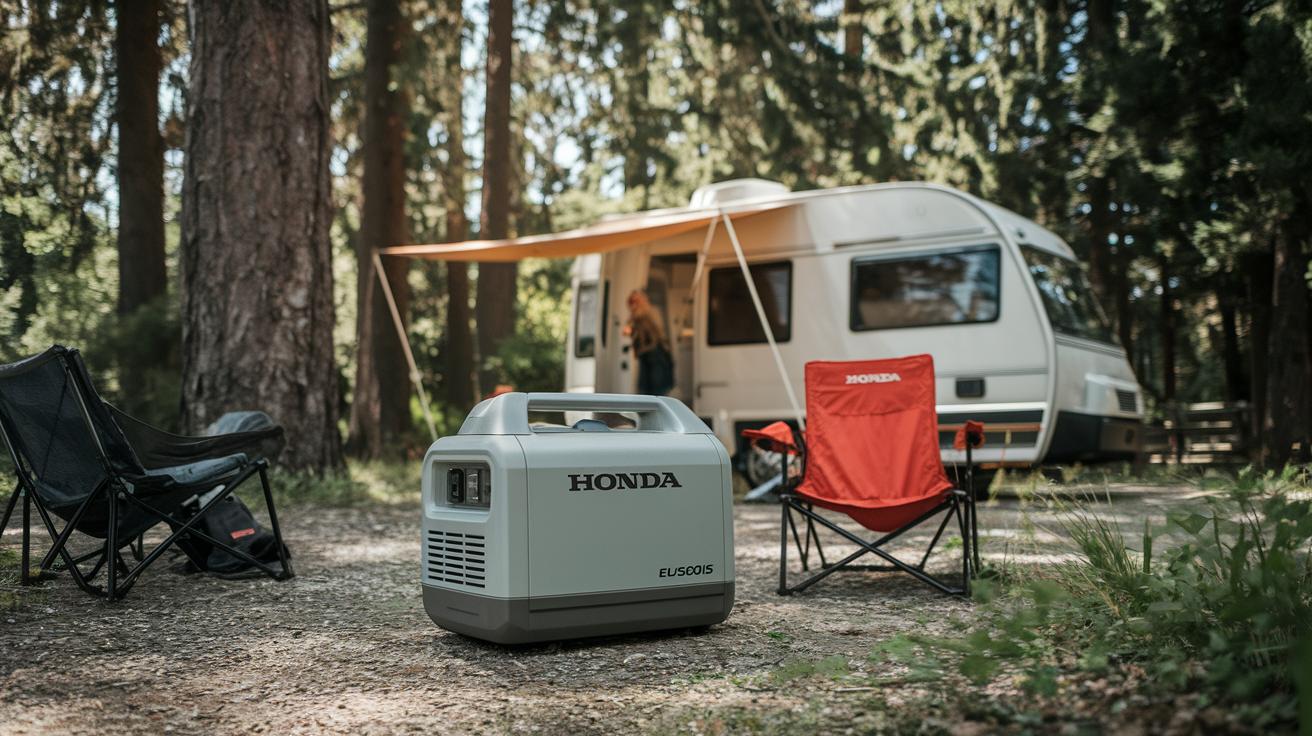
Inverter technology is a game-changer when you're out enjoying nature. It gives you steady, clean power while keeping the noise down so you can really relax. And if you’re running sensitive gadgets or just don’t want to disturb the peace, these generators are your best bet for blending modern comforts with the great outdoors.
Honda EU3000iS
The Honda EU3000iS packs a punch with 4,500 watts at peak and 3,700 watts on a steady run. It can last up to 8.6 hours at half load and hums along at under 60 decibels, quiet enough to keep your campsite serene. Sure, it tips the scale at 131 lbs, but its power means you can run everything from your kitchen gear to your air conditioner without a hiccup.
Honda EU2200i
If you’re looking for something lighter, the Honda EU2200i is a nifty little machine at just 47 lbs. It churns out 2,200 watts max and 1,800 watts on continuous power, running for about 8.1 hours at half load. With noise levels kept under 50 decibels, it’s your perfect travel buddy for tent camping or any spot where silence is golden, like carrying your own mini power station wherever you go.
Predator 3500
For a budget-friendly yet reliable option, the Predator 3500 steps up with a max of 3,500 watts and 3,000 watts rated. It’s known for running quietly while taking care of your basic power needs. This generator is a smart pick if you’re watching your expenses but still want a dependable gadget at your camp.
Predator 5000
If you need a bit more muscle, check out the Predator 5000. It pushes 5,000 watts at peak (4,000 watts rated) and comes with noise-reducing features so you stay undisturbed. It’s built for those times when you’ve got several or bigger devices that need steady power, ensuring your outdoor vibe stays as peaceful as a quiet night under the stars.
Maintenance and Safety Tips for Camping Generators
When you're out camping, keeping your generator safe is super important. Set it up on a flat, open spot so it gets plenty of fresh air and make sure its exhaust stays clear of your tent or RV. Always turn it off and let it cool before adding fuel, and consider using a carbon monoxide detector near your living area to catch any dangerous gas levels. Avoid running it all night because overuse can cause overheating, extra wear, and burn through fuel quickly. If you need power overnight, think about using battery banks or a solar setup instead.
Taking care of your generator is key to enjoying every trip. Before and after each outing, pop a quick check on the oil level, air filters, and spark plugs to ensure everything is in tip-top shape. These little checks not only boost performance but also help extend the life of your unit. Regular maintenance means you get reliable power and peace of mind every time you hit the road.
Selecting the Right Capacity for Your Camping Generator

Choosing the right generator for your camping trip is a smart move to keep your gear running smoothly. If you’re a tent camper, you might only need about 1,000–2,000 running watts for your small devices. But if you’re exploring in an RV, powering essentials like the refrigerator, microwave, and air conditioner means you’ll need roughly 3,000–5,500 watts. Getting the wattage just right can help protect your devices and make your fuel last longer. Underpowered generators can cause voltage drops and overheating, while a unit with too much capacity wastes fuel and ups your expenses.
Here’s a simple way to calculate your wattage needs:
- Write down all the devices you plan to power.
- Check each device’s starting (surge) wattage and running wattage.
- Add up the running wattages to find your continuous load.
- Identify the device with the highest surge wattage.
- Compare the total of the surge wattage and continuous load with the generator’s specs.
It’s always a good idea to add a little extra capacity. Choosing a generator that goes a bit over your calculated wattage gives you a safety cushion. That extra power covers the initial surge when devices turn on and even leaves room for any new gadgets you might add later. Whether you’re using it as a backup for your RV or a reliable power source on your outdoor trips, a little buffer can make your experience safer and more efficient.
Final Words
In the action, we've covered key features, fuel considerations, noise reduction tips, top quiet models, and essential maintenance practices for your camping generator. We broke down how vital it is to balance power output, portability, and safety while matching generator capacity to your load.
Each section offered practical tips to help you make wise decisions and stay confident at camp. Enjoy the convenience and peace of mind that come with choosing the perfect camping generator for your needs.
FAQ
Q: What is a good size generator for camping?
A: A good size camping generator depends on your power needs. Tent campers often require 1,000–2,000 running watts for essentials, while RV users may need 3,000–5,500 watts for appliances and climate control.
Q: Are generators worth it for camping?
A: Generators offer reliable energy for lights, devices, and small appliances. Their convenience and versatility can greatly enhance your outdoor experience by providing power when traditional outlets aren’t available.
Q: How long will a generator run on a 20lb tank of propane?
A: A generator running on a 20lb propane tank typically provides about eight hours of runtime at a moderate load, though actual performance may vary based on load and generator efficiency.
Q: Can I run my AC in my RV with the generator?
A: The ability to run your RV air conditioner with a generator depends on the unit’s wattage and surge capacity. Check your generator’s specifications to ensure it can safely handle your AC and other appliances.
Q: What defines a top Honda camping generator?
A: Top Honda camping generators use inverter technology for consistent power, operate quietly under 60 decibels, and boast efficient fuel use and robust designs, making them ideal for varied outdoor applications.
Q: How does a solar camping generator work?
A: A solar camping generator uses panels to convert sunlight into stored battery power. This eco-friendly solution offers quiet, emission-free energy for small devices when you’re off the traditional power grid.
Q: What makes a camping generator quiet?
A: Quiet camping generators employ inverter technology and noise-dampening features to keep sound levels around or below 60 decibels. This design ensures a peaceful environment without disturbing your campsite.
Q: What does a 3000-watt camping generator power?
A: A 3000-watt camping generator can handle essential devices like lights, phones, and small appliances. It’s perfect for everyday camp use, although higher-demand equipment may require a higher-capacity unit.
Q: Where can I purchase a reliable camping generator?
A: You can find a variety of reliable camping generators on platforms such as Amazon, where detailed specifications and customer reviews help you choose a model that fits your outdoor power needs.